अभ्यास
Abhyāsa
Teaching as a Practice of Knowing
Pramāṇa-based teacher handbooks that help educators meaningfully integrate Indian Knowledge Systems into everyday Mathematics and Science classrooms.
Thoughtfully aligned with the NCERT curriculum and designed for practical classroom use.
Mathematics & Science | Grades 1–5
IKS, WITHIN THE EVERYDAY CLASSROOM
What if Indian Knowledge Systems shaped not only what children learn, but how they learn?
IKS integration is often limited to an additional story, activity, or cultural reference. Abhyāsa takes a deeper approach. It draws from the Indian understanding of Pramāṇa, the valid means through which knowledge arises, to shape the architecture of the lesson itself.
Children begin by experiencing a concept, reasoning from what they observe, receiving formal knowledge at the right moment, and deepening their understanding through practice.The result is learning that feels rooted, experiential, thoughtful, and alive.
The question is not only, “What should I teach?” It is also, “How will the child come to know?” Abhyāsa is built around Pratyakṣa, Anumāna and Śabda: direct experience, inferential reasoning, and reliable knowledge recieved from a book or an expert.
THE CHALLENGE
Why Abhyāsa?
A textbook reaches the child through the teacher. The potential of any curriculum comes alive in the choices a teacher makes.
What experience should begin the lesson? What question might awaken curiosity? When should the teacher explain? How can children practise without merely repeating?
Abhyāsa helps teachers make these choices with greater clarity and confidence. It is not a rigid teaching script. It is a practical thinking companion that reveals the purpose, sequence, and possibilities within each lesson.
Disconnected Learning
Concepts are often introduced as abstract ideas before children have had the opportunity to experience them firsthand.
Beyond Content Delivery
Teachers aspire to create meaningful learning experiences but often lack practical frameworks that support this shift.
IKS as an Add-on
Indian Knowledge Systems are frequently introduced as occasional stories or activities rather than shaping the way lessons are designed.
Questions That End Learning
Many classroom questions check whether students remember the answer instead of helping them observe, reason, and discover it.
Planning Without a Pedagogical Lens
Teachers need curriculum-aligned guidance that helps them design engaging, inquiry-based lessons without increasing their planning burden.
THE ABHYĀSA APPROACH
How A Lesson Unfolds
From encountering an idea to truly understanding it.
01 — PRATYAKṢA
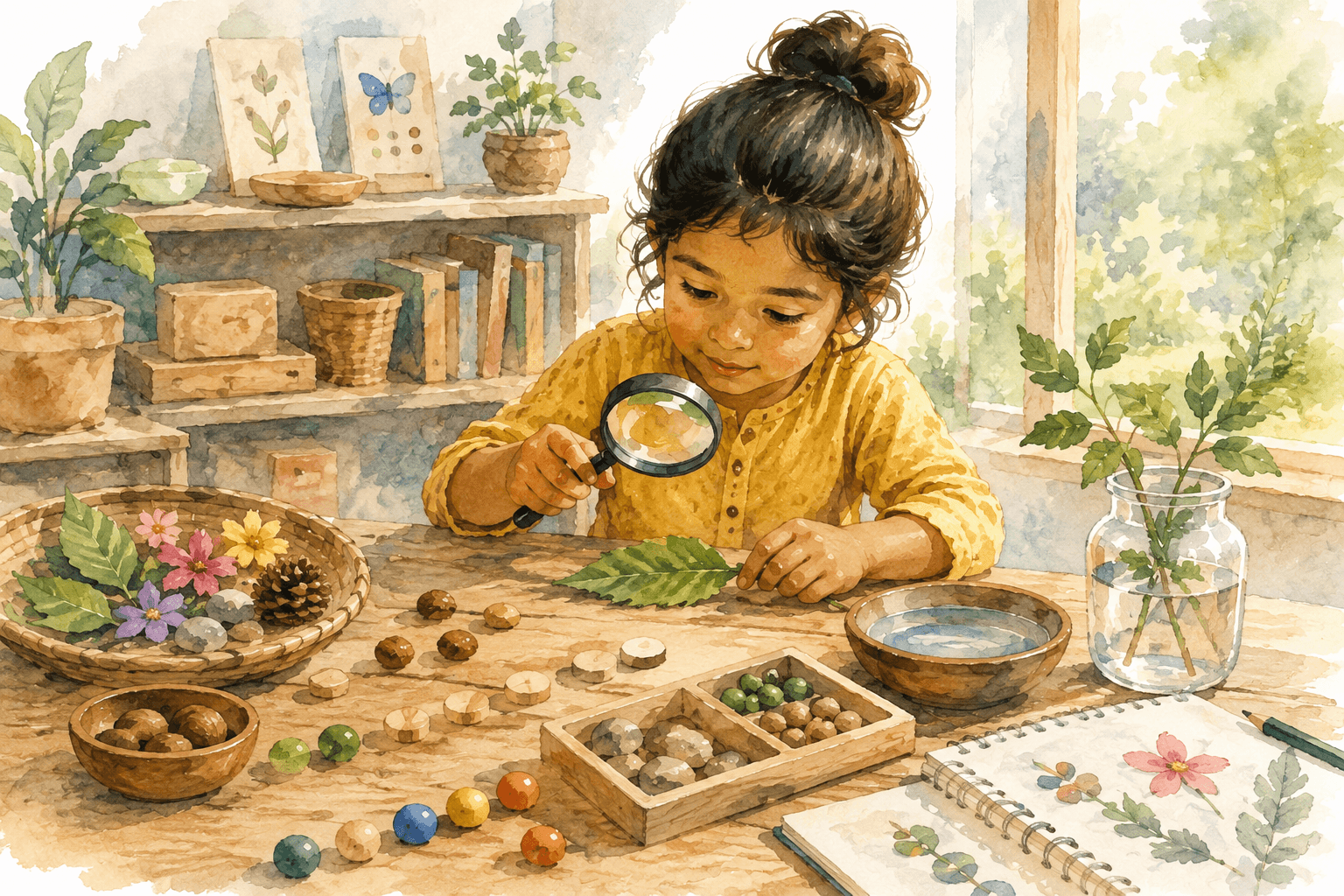
Experience
The child encounters the concept directly through observation and action.They count, sort, measure, compare, touch, test, draw, arrange, or investigate.The experience belongs to the child and not merely to the teacher demonstrating it.
The teacher asks: What will the child directly experience?
02 — ANUMĀNA
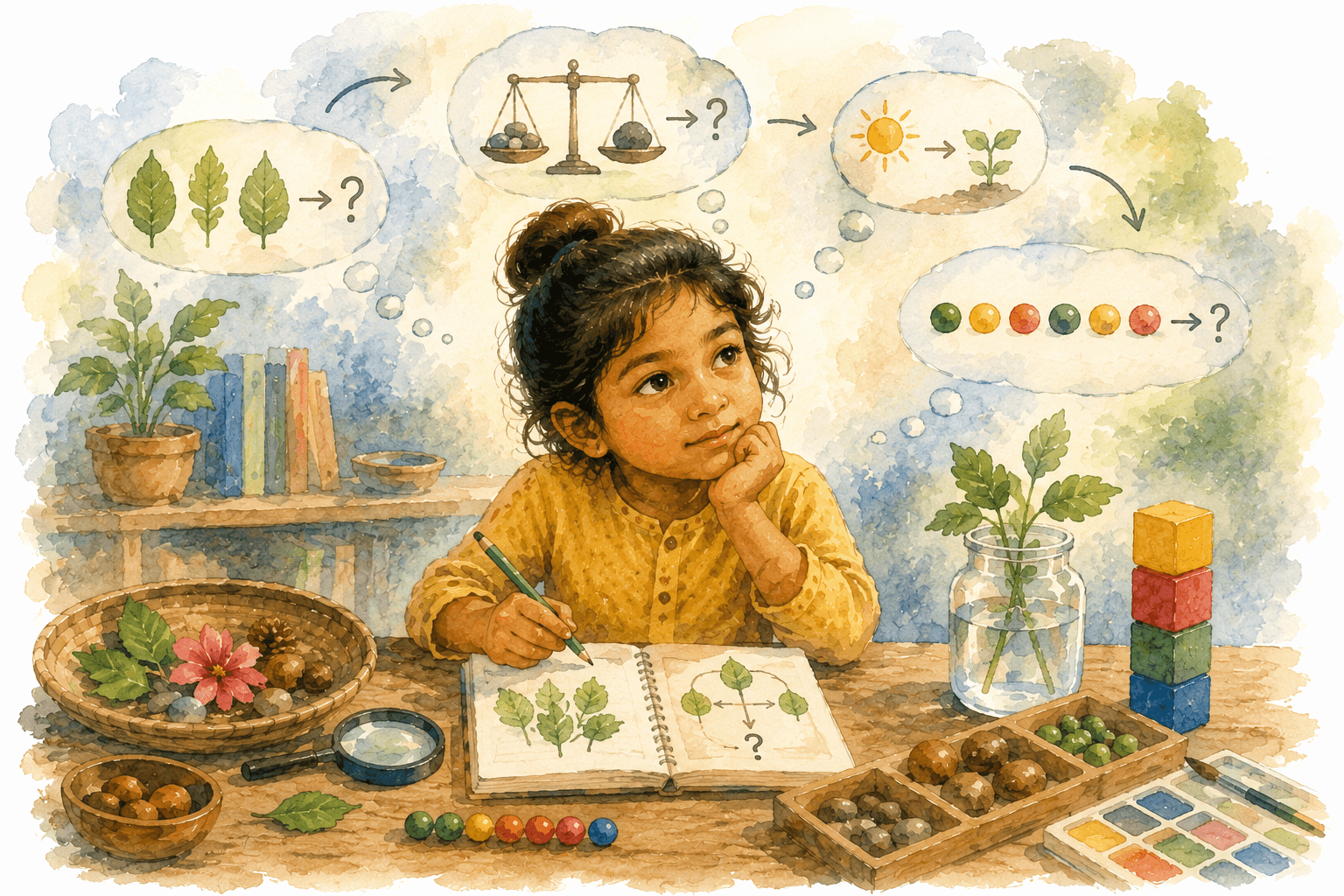
Reason
The child begins to notice patterns, make predictions, explore relationships, and draw conclusions from what has been observed. Rather than rushing towards the answer, the teacher uses carefully designed questions to support reasoning.
The teacher asks: What can the child infer from this experience?
03 — ŚABDA
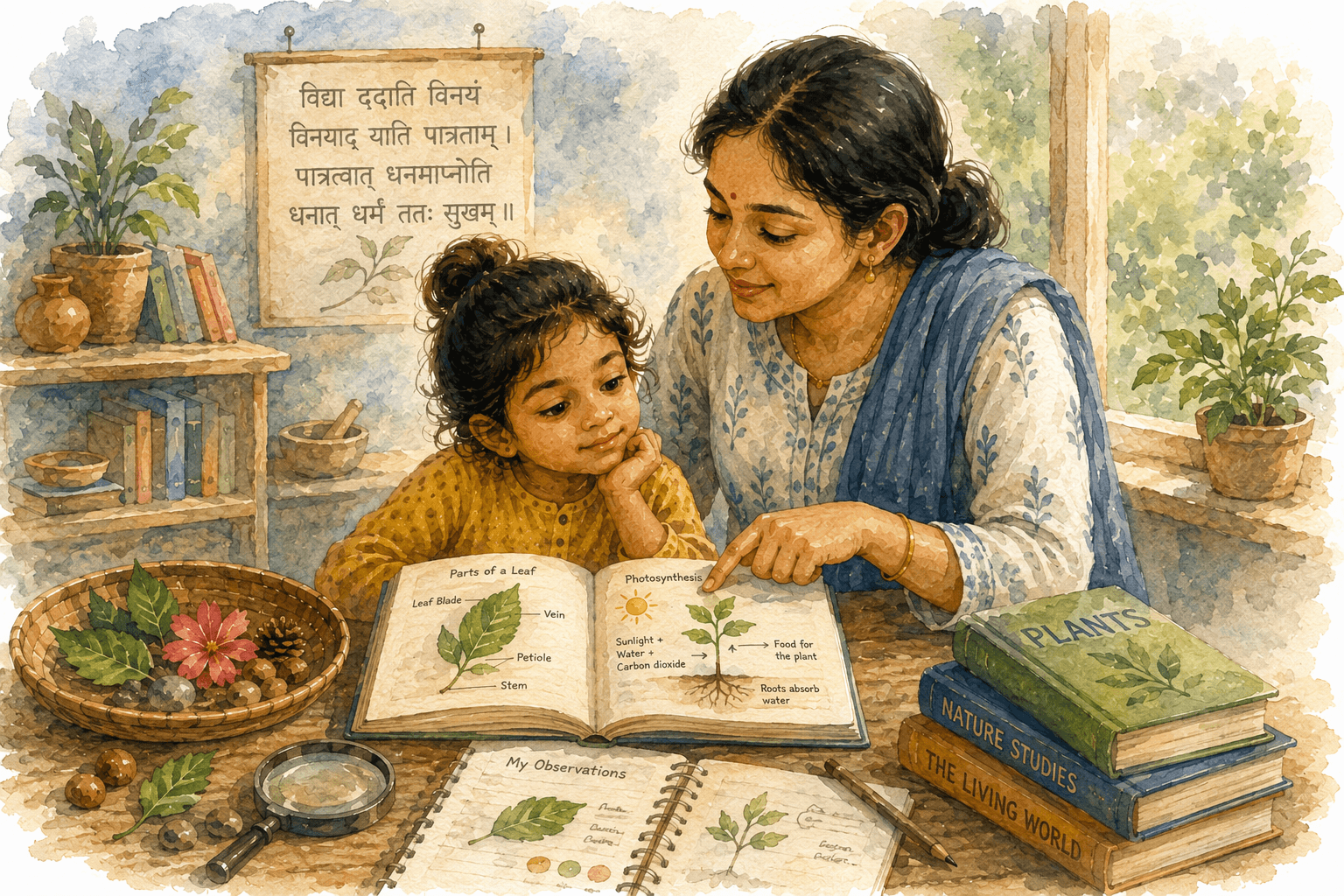
Understand
The teacher introduces precise terminology, formal concepts, textual knowledge, or established explanations. Because these now connect to an experience the child has already had, knowledge becomes meaningful rather than something to memorise in isolation.
The teacher asks: What reliable knowledge will consolidate the child’s understanding?
04 — ABHYĀSA
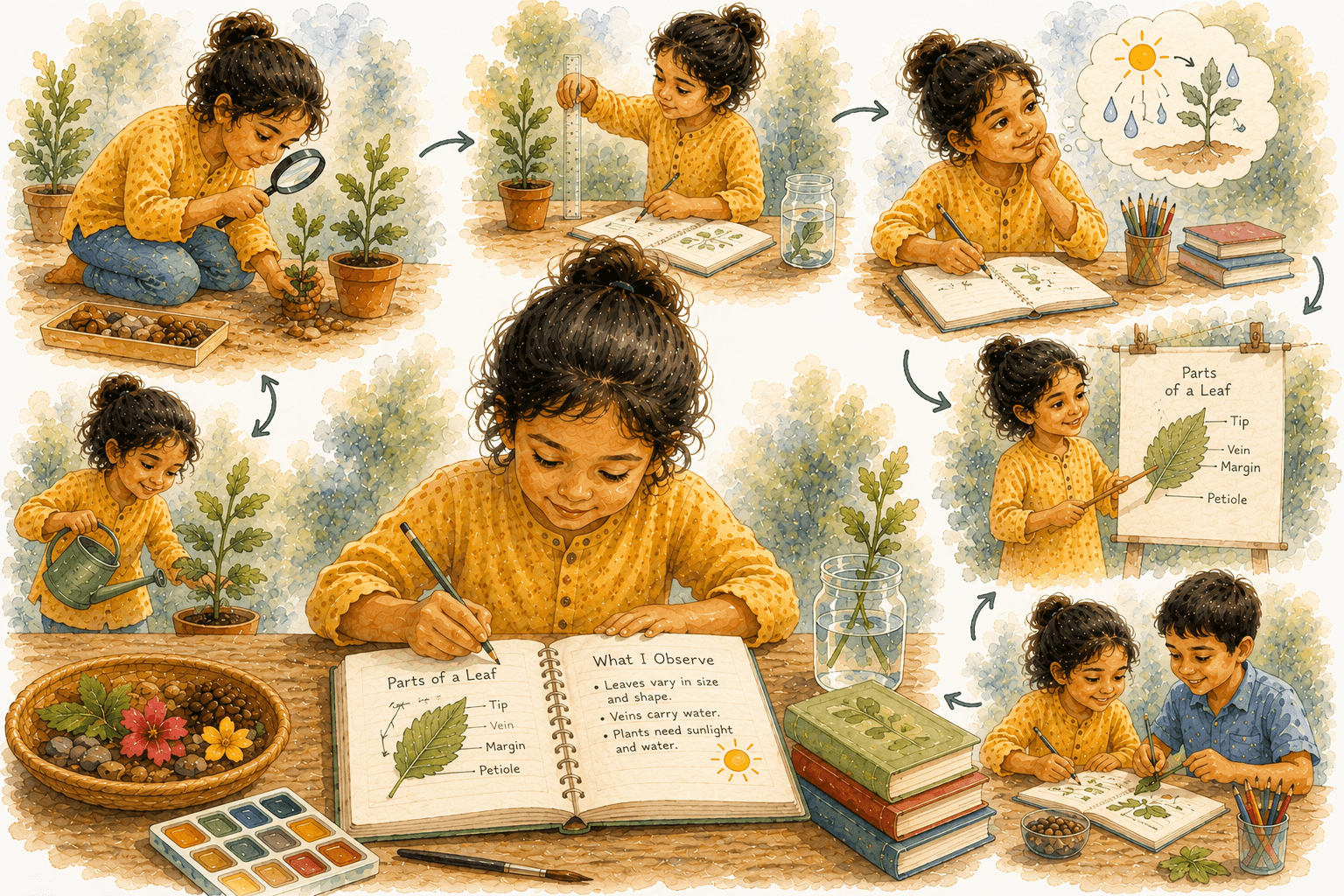
Deepen
Understanding becomes steady through meaningful practice. Children apply the concept independently, encounter it in new situations, make connections, and develop confidence in using what they have learned.
The teacher asks: How will the child practise, extend, and apply this understanding?
THE ABHYĀSA SERIES
Two subjects. One coherent way of teaching.
Abhyāsa is currently available as two distinct teacher handbooks for Grades 1–5. Each handbook follows the NCERT curriculum while enriching classroom learning through direct experience, inquiry, culturally rooted contexts, thoughtful questioning, assessment, and reflection.
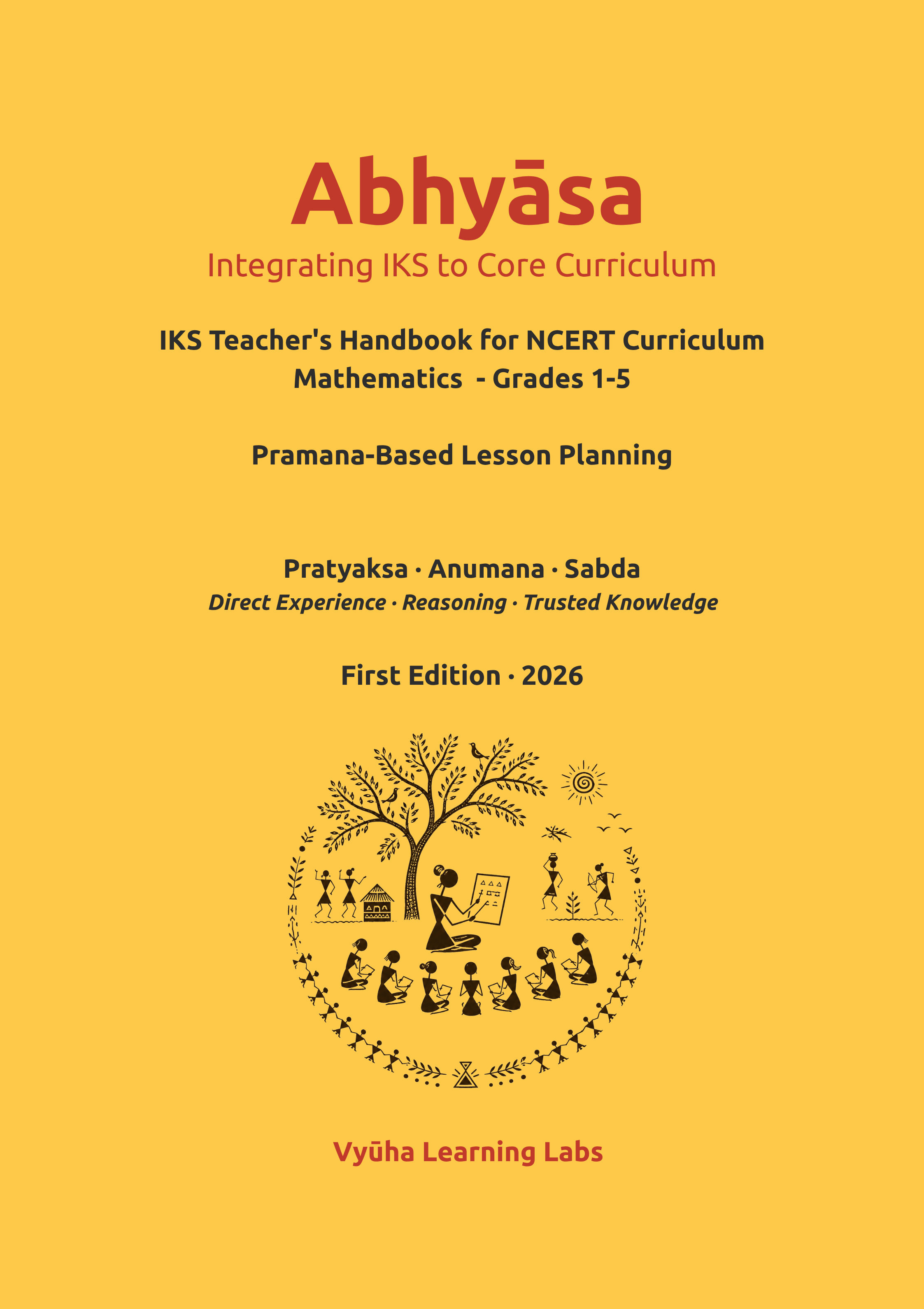
MATHEMATICS | GRADES 1–5
It begins when a child counts objects, notices a pattern, compares quantities, measures a space, arranges forms, or wonders why a relationship remains true. The Abhyāsa Mathematics Handbook helps teachers ground mathematical ideas in experience before moving towards reasoning, abstraction, and formal understanding.
Inside the Maths Handbook
- Pramāṇa-based lesson planning framework
- Chapter-wise lesson plans (30% of the syllabus)
- Hands-on mathematical explorations
- Questions for reasoning and inference
- Connections with Indian mathematical traditions
- Classroom activities using accessible materials
- Assessment and observation guidance
- Inclusion and differentiation strategies
- Independent practice and extension activities
- Teacher reflection prompts
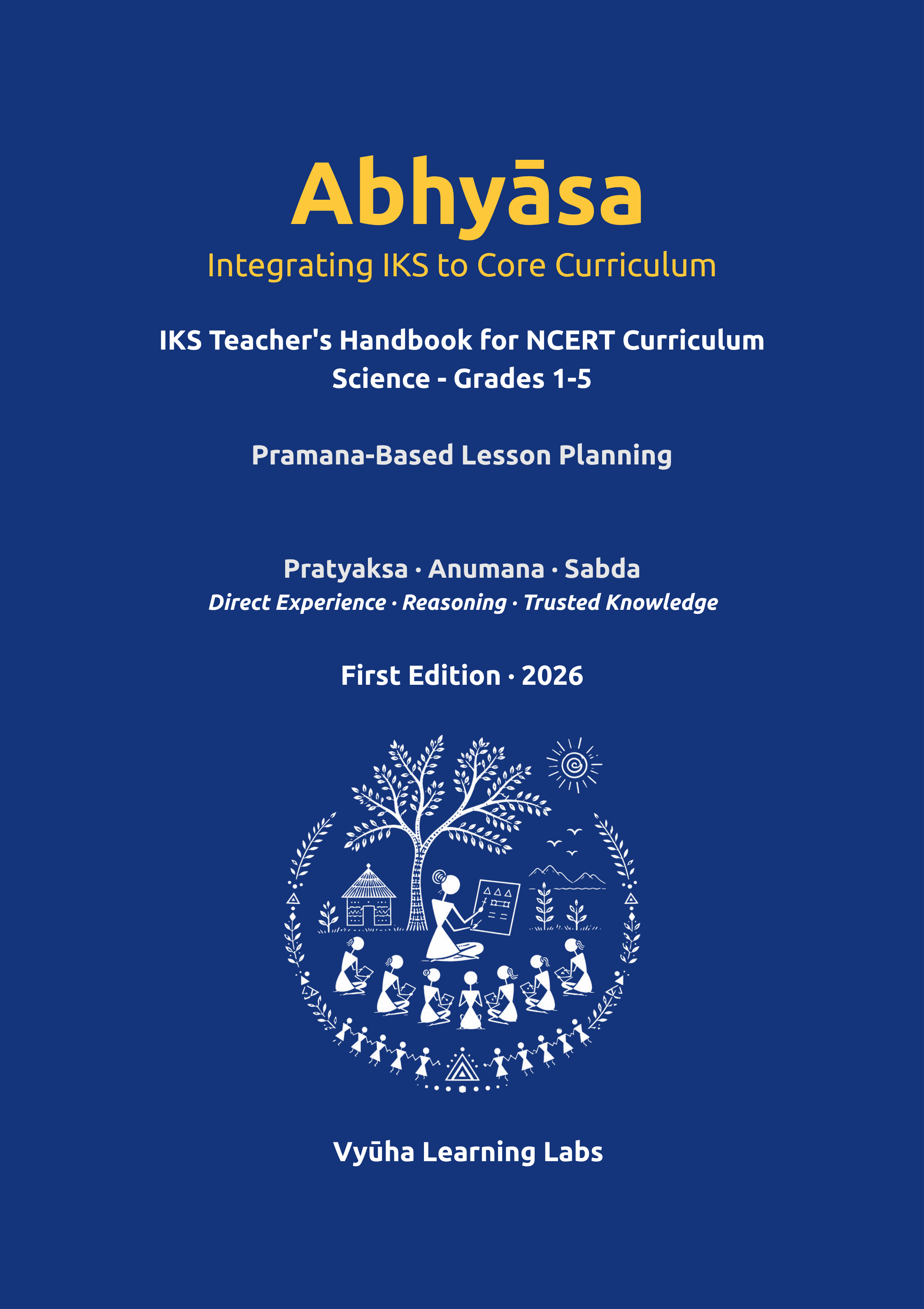
SCIENCE | GRADES 1–5
A leaf held against the light. The warmth of a sunlit surface. The changing movement of a shadow. The behaviour of water, soil, air, and living things. The Abhyāsa Science Handbook helps teachers turn the child’s encounter with the natural and material world into careful observation, inquiry, reasoning, and scientific understanding.
Inside the Science Handbook
- Pramāṇa-based lesson planning framework
- Chapter-wise lesson plans (30% of the syllabus)
- Observation-led investigations
- Experiments using accessible materials
- Questions that develop scientific reasoning
- Connections with Indian scientific knowledge traditions
- Assessment and reflection tools
- Inclusion and differentiation strategies
- Independent practice and extension activities
- Teacher observation points
FROM PAGE TO PRACTICE
Every page is designed to create a living learning experience.
This is how a Science Lesson on Force, Work and Energy will unfold
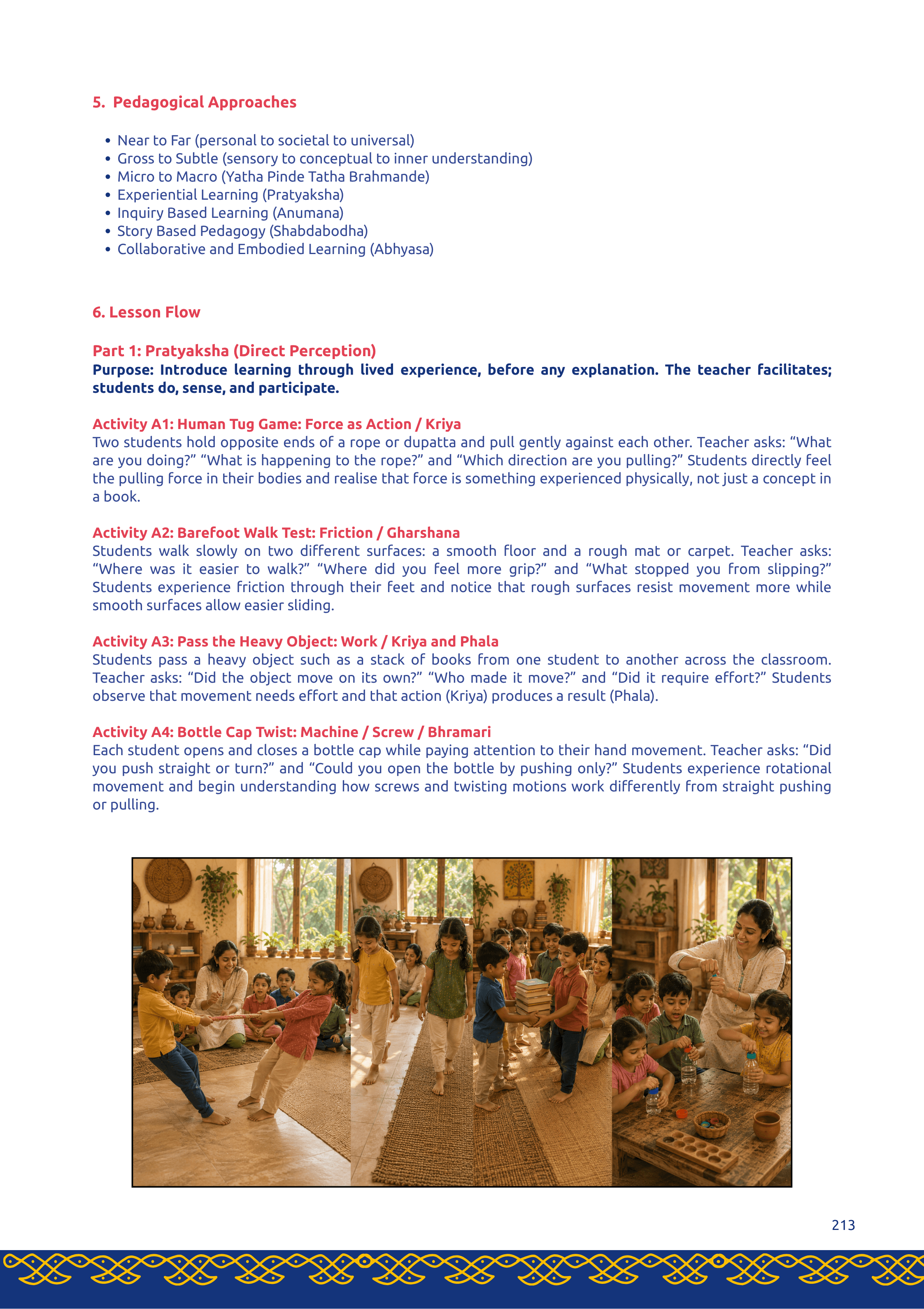
PRATYAKṢA
On the Page
The lesson begins with children exploring familiar actions pushing a chair, pulling a rope, lifting a bag, rolling an object, or opening a lid. Rather than introducing scientific terms immediately, the handbook invites children to experience force through movement and direct sensory interaction.
In the Classroom
The room comes alive with movement. Children push, pull, lift, turn, compare, and experiment. They notice that some objects are easier to move than others and begin wondering why different surfaces affect motion differently.
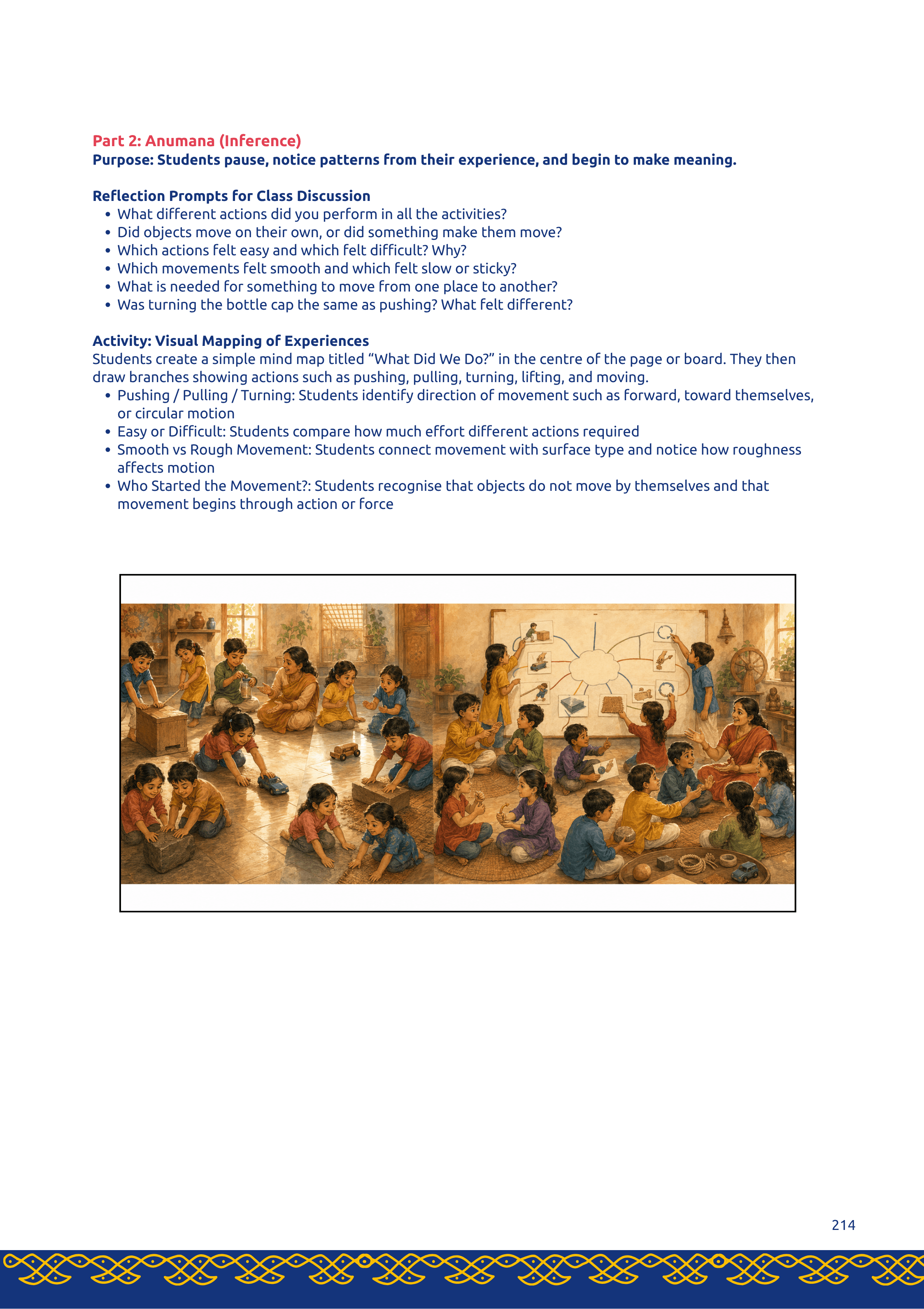
ANUMĀNA
On the Page
Thoughtfully sequenced inquiry prompts encourage children to observe patterns, compare their experiences, and reason about what they have discovered before formal explanations are introduced.
In the Classroom
Instead of being told what force is, children begin asking: "Why was it easier to move this object?" "Why did the box slide farther on one surface?" "What made it stop?"
Their observations naturally become scientific reasoning.
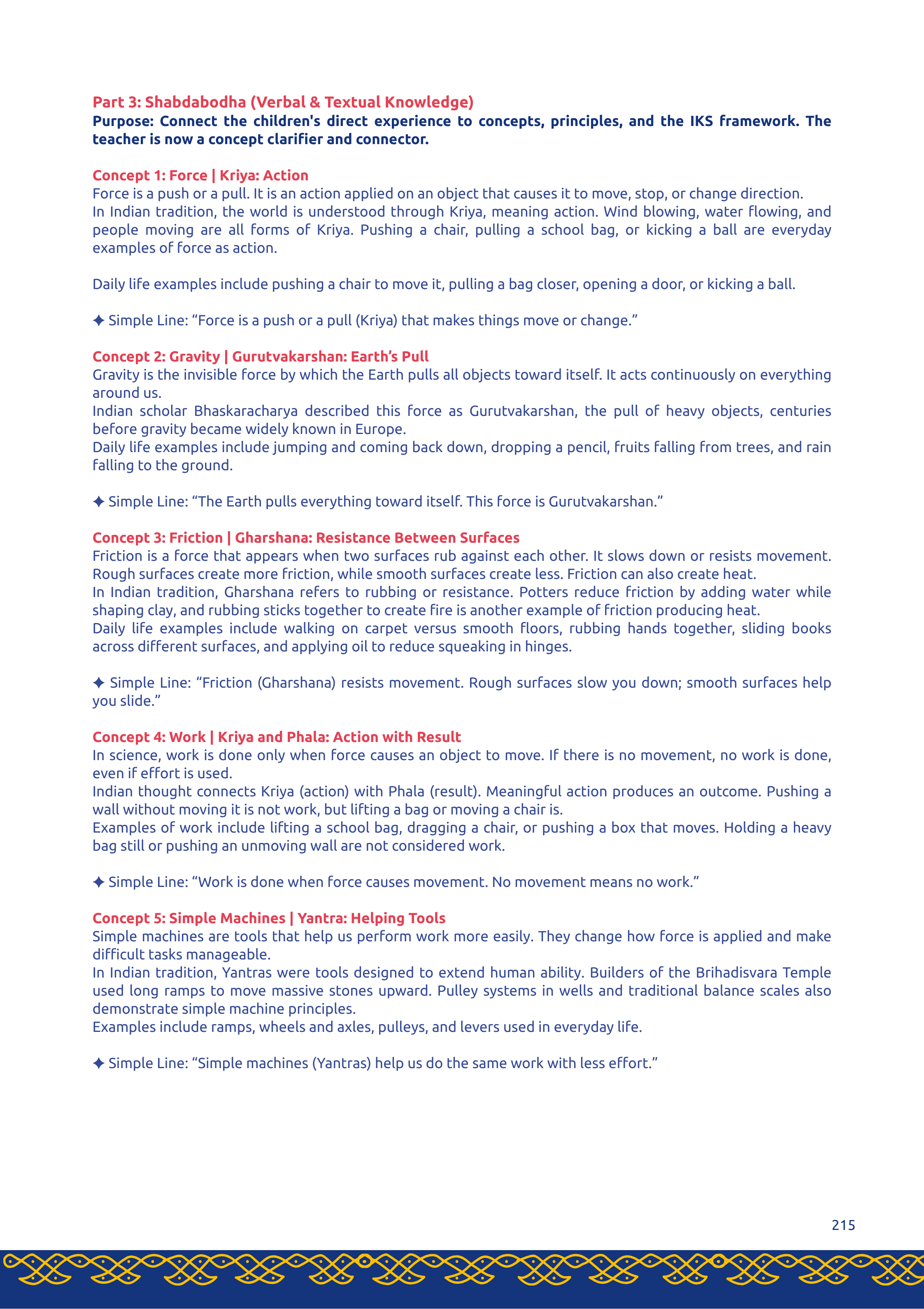
ŚABDA
On the Page
Only after children have experienced and reasoned does the handbook guide the teacher to introduce concepts such as Force (Kriya), Gravity (Gurutvakarṣaṇa), Friction (Gharṣaṇa), Work, Simple Machines (Yantra), and Energy (Śakti), connecting scientific understanding with Indian knowledge traditions.
In the Classroom
Scientific vocabulary no longer feels abstract. Children connect each new concept with something they have already touched, felt, observed, and discussed, making the ideas easier to understand and remember.
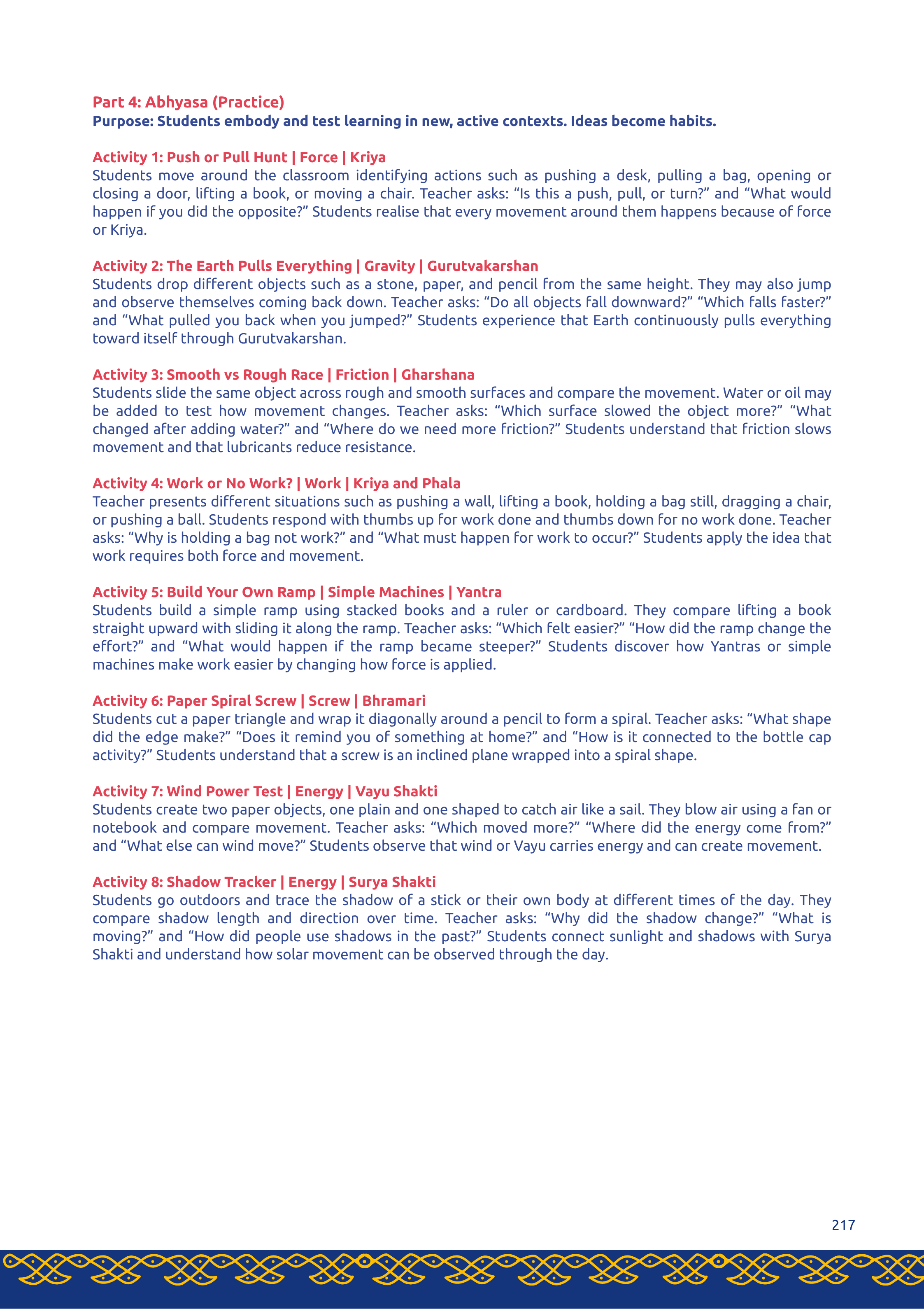
ABHYĀSA
On the Page
The lesson concludes with creative practice and real-life applications. Children explore how ramps reduce effort, how tools make work easier, and how natural sources like the Sun and wind provide energy in everyday life.
In the Classroom
Learning extends beyond the textbook. Children begin recognising force, work, and energy in playgrounds, homes, classrooms, and the world around them, seeing science not as a chapter to complete, but as a way of understanding everyday life.
Abhyāsa doesn't simply provide lesson plans. It helps teachers transform every chapter into an experience that children can observe, reason about, understand, and carry into the world beyond the classroom.
Everything a teacher needs to plan with clarity.
The Pedagogical Shift
The same curriculum. A deeper encounter with knowledge.
Small shifts in how a lesson begins, unfolds, and concludes can transform how children come to know.
Instead of beginning with an explanation
Click to reveal
Begin with experience.
Let children first observe, touch, move, test, compare, or investigate before the concept is formally introduced.
Instead of asking children to remember a method
Click to reveal
Let them reason from evidence.
Encourage children to notice patterns, make predictions, explore relationships, and explain how they arrived at an understanding.
Instead of asking questions that test recall
Click to reveal
Ask questions that awaken thought.
Use questions that invite children to observe more carefully, wonder, connect ideas, reason, and arrive at conclusions.
Instead of introducing terminology before experience
Click to reveal
Let knowledge arrive on prepared ground.
Introduce formal concepts, definitions, and subject vocabulary after children have an experience to connect them with.
Instead of using practice as repetition
Click to reveal
Use Abhyāsa to deepen understanding.
Let children apply ideas in new situations, make connections, experiment independently, and gradually make their understanding steady.
Instead of assessing only the final answer
Click to reveal
Observe the process of knowing.
Pay attention to how the child experiences, notices, reasons, explains, applies, and ultimately arrives at an understanding.
Abhyāsa does not change what must be taught. It changes how the child encounters, reasons with, and ultimately understands it.
WHAT SETS IT APART
The Building Blocks of Abhyāsa
01
Pramāṇa-Based
The learning experience is organised around how genuine knowledge arises according to the Indian episteme and not merely around activities or content coverage.
02
Integrated with Core Subjects
IKS is woven into present Mathematics and Science curriculum rather than being added as an occasional cultural component.
03
Aligned with NCERT
The handbooks enrich the existing curriculum without requiring schools to introduce an unrelated parallel programme making the IKS integration feel simple and seamless.
04
Chapter-Wise and Classroom-Ready
Teachers receive a clear pathway for translating the framework into everyday practice through the detailed lesson plans provided for every chapter.
05
Adaptable Across Contexts
Activities and questions can be adapted to suit different classroom resources, languages, learner needs, and school environments.
06
Designed to Build Teacher Capacity
Over time, teachers can internalise the Pramāṇa framework and begin applying it while designing their own lessons.
The Growing Series
Beginning with Grades 1–5.
Growing towards Grade 8.
Abhyāsa begins with teacher handbooks for Mathematics and Science across Grades 1–5, mapped to the NCERT curriculum. The next series for Grades 6, 7 and 8 is currently under development, extending the same Pramāṇa-based approach into middle school classrooms.
Grades 1–2
Experience & Expression
Available NowGrades 3–5
Observation, Reasoning & Connection
Available NowGrades 6–8
Inquiry, Evidence & Conceptual Depth
Coming SoonWho it is for
Built for everyone who shapes learning.
Whether you teach a classroom, support teachers, or lead a school, Abhyāsa provides a practical framework for bringing Indian Knowledge Systems into everyday Mathematics and Science teaching.
If you want your Mathematics and Science lessons to become more experiential, inquiry-driven, and rooted in Indian ways of knowing, Abhyāsa provides classroom-ready lesson plans, meaningful activities, thoughtful questions, and practical teaching guidance that can be implemented immediately.
You'll appreciate
- Ready-to-use lesson plans
- Pramāṇa-based classroom flow
- Hands-on learning experiences
- Assessment and differentiation guidance
Support teachers with a coherent pedagogical framework that strengthens lesson planning, classroom observation, and collaborative professional development across the school.
You'll appreciate
- Consistent lesson architecture
- Shared teaching language
- Classroom observation support
- Teacher capacity building
Move beyond occasional cultural activities and integrate Indian Knowledge Systems meaningfully into the everyday teaching of core academic subjects through a structured and implementable approach.
You'll appreciate
- Curriculum-aligned implementation
- Whole-school consistency
- Practical IKS integration
- Scalable teacher adoption
Introduce future and practising teachers to an Indian framework of knowing that is both philosophically grounded and immediately applicable within contemporary classrooms.
You'll appreciate
- A clear pedagogical framework
- Practical classroom examples
- Reflection-based teacher learning
- Contemporary applications of IKS
FOR SCHOOLS AND INSTITUTIONS
Bring Indian Knowledge Systems into the everyday life of the classroom.
Abhyāsa gives teachers more than ready-to-use lesson plans.
It offers a way of seeing teaching differently, to begin with experience, awaken reasoning, introduce knowledge with care, and allow understanding to deepen through practice. For schools seeking meaningful IKS integration within Mathematics and Science, Abhyāsa offers a structured, thoughtful, and classroom-ready beginning.
Abhyāsa
Rooting learning in the living wisdom of India
A teacher handbook designed by Vyuha Learning Labs